

"Most water damage doesn't start with a major leak. It starts with a small problem that nobody thought was urgent."
Water leakage remains one of the most persistent building issues across Malaysia. Whether it's a landed house, condominium, commercial shop lot, office building, or industrial facility, water intrusion can quietly cause significant damage long before obvious signs appear.
Unfortunately, many property owners still make decisions based on outdated beliefs and misconceptions about waterproofing. These myths often lead to delayed maintenance, ineffective repairs, and much higher restoration costs in the future.
Before your next leak becomes a major renovation project, here are five common waterproofing myths every Malaysian property owner should understand.
Why Waterproofing Is Essential for Malaysian Properties
Malaysia's year-round tropical weather places buildings under constant environmental stress. Frequent heavy rainfall, high humidity levels, intense UV exposure, and daily temperature fluctuations can gradually weaken roofs, walls, balconies, bathrooms, and other exposed building components.
Without a reliable waterproofing system, water can slowly seep into the structure through small cracks, joints, or vulnerable surfaces. What may initially appear as a minor damp spot can eventually develop into more serious issues such as peeling paint, mold growth, concrete damage, corrosion of steel reinforcement, and even structural deterioration. These problems not only affect the appearance and safety of a property but can also lead to costly repair and renovation expenses.
For this reason, waterproofing should be considered a proactive investment in building maintenance rather than a reactive solution after leaks occur. Proper waterproofing helps preserve structural integrity, extend the lifespan of a property, and protect owners from avoidable long-term repair costs.
Myth #1: Only Old Buildings Need Waterproofing
A common misconception among property owners is that waterproofing only becomes important when a building starts to age. While older structures may be more vulnerable to wear and tear, water leakage can occur in buildings of any age—including newly completed homes, commercial properties, and high-rise developments.
In many cases, leaks in newer buildings are caused by factors such as poor workmanship, inadequate waterproofing installation, defective drainage systems, structural movement, or failed sealants around windows and construction joints. These issues can allow water to penetrate the building long before visible signs of deterioration appear.
The reality is that water does not discriminate based on a building's age. Whenever there is an opening, crack, or weakness in the building envelope, moisture can find its way inside and begin causing damage. This is why waterproofing should be treated as a preventive measure rather than a repair solution. Investing in proper waterproofing during construction and conducting regular inspections afterward can help extend the lifespan of a property, prevent costly repairs, and protect its long-term value.
Myth #2: Waterproofing Is Too Expensive
One of the most common reasons property owners delay waterproofing work is the perception that it is too costly. However, this belief often overlooks the much higher cost of repairing water damage after a leak has been left untreated. Many people compare the price of waterproofing to doing nothing, rather than comparing it to the expenses associated with ceiling replacements, damaged flooring, wall repairs, mold removal, electrical issues, and structural restoration. What starts as a small leak can gradually develop into a major maintenance problem that requires extensive and expensive repairs.
In reality, waterproofing should be viewed as a preventive investment that protects a property from far greater financial losses in the future. Addressing water intrusion early is almost always more affordable than repairing the damage it causes over time.
Myth #3: Repainting a Damp Wall Will Solve the Problem
When damp patches, water stains, or peeling paint appear on a wall, many homeowners assume that a fresh coat of paint will solve the issue. While repainting may temporarily improve the appearance of the affected area, it does not address the actual source of the moisture. Water can continue to penetrate behind the newly painted surface, eventually causing the paint to blister, peel, and fail once again. In many cases, damp walls are symptoms of larger problems such as roof leaks, balcony waterproofing failures, external wall seepage, hidden plumbing leaks, or rising moisture from the ground. Treating the surface without resolving the source of water intrusion only masks the problem and allows further damage to occur behind the scenes.
Paint can cover stains, but it cannot stop water. Lasting results can only be achieved by identifying and repairing the source of the leak before carrying out cosmetic improvements.
Myth #4: Waterproofing Is Just Applying a Waterproof Coating
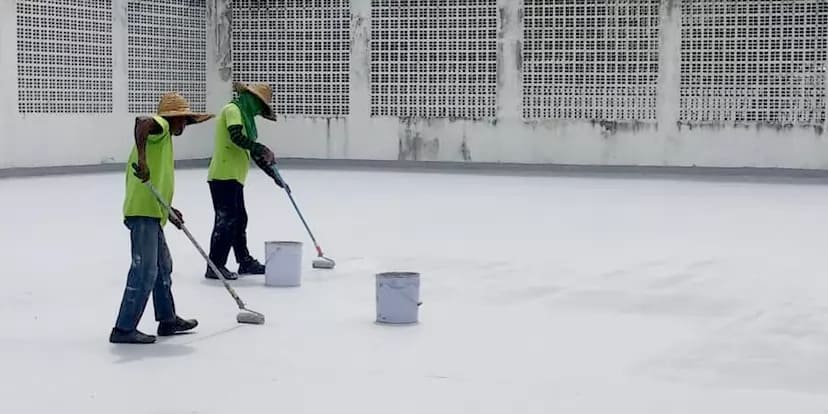
Many people believe waterproofing is simply a matter of applying a waterproof coating to a surface. In reality, effective waterproofing involves much more than a single product or layer. Professional waterproofing systems are designed based on the type of structure, the source of the leak, and the level of water exposure. Depending on the situation, a complete solution may include crack repairs, joint sealing, PU injection grouting, waterproof membranes, cementitious waterproofing systems, polyurethane coatings, drainage improvements, and thorough surface preparation.
Different areas of a building also require different approaches. Roofs and balconies need materials that can withstand UV exposure and thermal movement, while bathrooms, wet areas, and underground structures require systems specifically designed to handle constant moisture or hydrostatic pressure.
There is no one-size-fits-all waterproofing solution. Successful waterproofing depends on accurate diagnosis, suitable materials, and proper installation techniques tailored to the specific conditions of the building.
Myth #5: DIY Waterproofing Is Just as Effective as Professional Solutions
The availability of DIY waterproofing products has led many property owners to believe they can solve leakage issues on their own. While these products may be suitable for minor maintenance or temporary fixes, they are often ineffective when dealing with recurring leaks or complex water intrusion problems.
One of the biggest challenges is that water does not always appear where it enters the building. A damp wall, for example, may actually be caused by a roof defect, a leaking balcony, a failed window seal, or hidden plumbing issues elsewhere. Professional waterproofing specialists are trained to identify the true source of water intrusion and apply the most appropriate repair method. They also pay close attention to critical failure points such as construction joints, expansion joints, pipe penetrations, floor waste outlets, and wall-to-floor connections, which are commonly overlooked during DIY repairs.
Effective waterproofing is not about covering visible symptoms. It is about identifying the root cause of the problem and implementing a long-term solution that prevents the issue from returning.
Early Warning Signs You Should Never Ignore
Serious water damage rarely occurs overnight. In most cases, there are early warning signs that indicate a waterproofing issue is developing. Property owners who recognise these signs early can often prevent extensive damage and costly repairs later. Common indicators include peeling or bubbling paint, damp patches on walls, water stains on ceilings, mold or mildew growth, musty odours, cracks around windows or external walls, standing water on rooftops or balconies, and persistent moisture after rainfall. Although these signs may seem minor at first, they often indicate that water is already penetrating the building structure.
Early detection allows problems to be addressed before they escalate, helping to protect both the condition and value of the property.
Protect Your Property Before Small Leaks Become Major Repairs
Waterproofing myths continue to cause many property owners to underestimate the seriousness of water intrusion. The reality is that waterproofing is not reserved for old buildings, repainting damp surfaces does not solve leakage problems, and no single product can address every waterproofing challenge. Most importantly, delaying repairs almost always leads to higher costs in the future.
Whether for residential, commercial, or industrial properties, one principle remains consistent: the earlier a waterproofing issue is identified and repaired, the easier and more affordable it is to resolve. Ignoring small leaks today often results in significant restoration work tomorrow.
If you have noticed signs such as recurring leaks, damp walls, peeling paint, mold growth, or water stains within your property, now is the best time to investigate the cause. A professional waterproofing assessment can accurately identify the source of the problem and recommend the most effective solution before further damage occurs.


